 FlaskConnect™
Home › Apparatus gallery › Simple distillation
Simple Distillation Apparatus Diagram (Labeled, Free SVG/PNG)
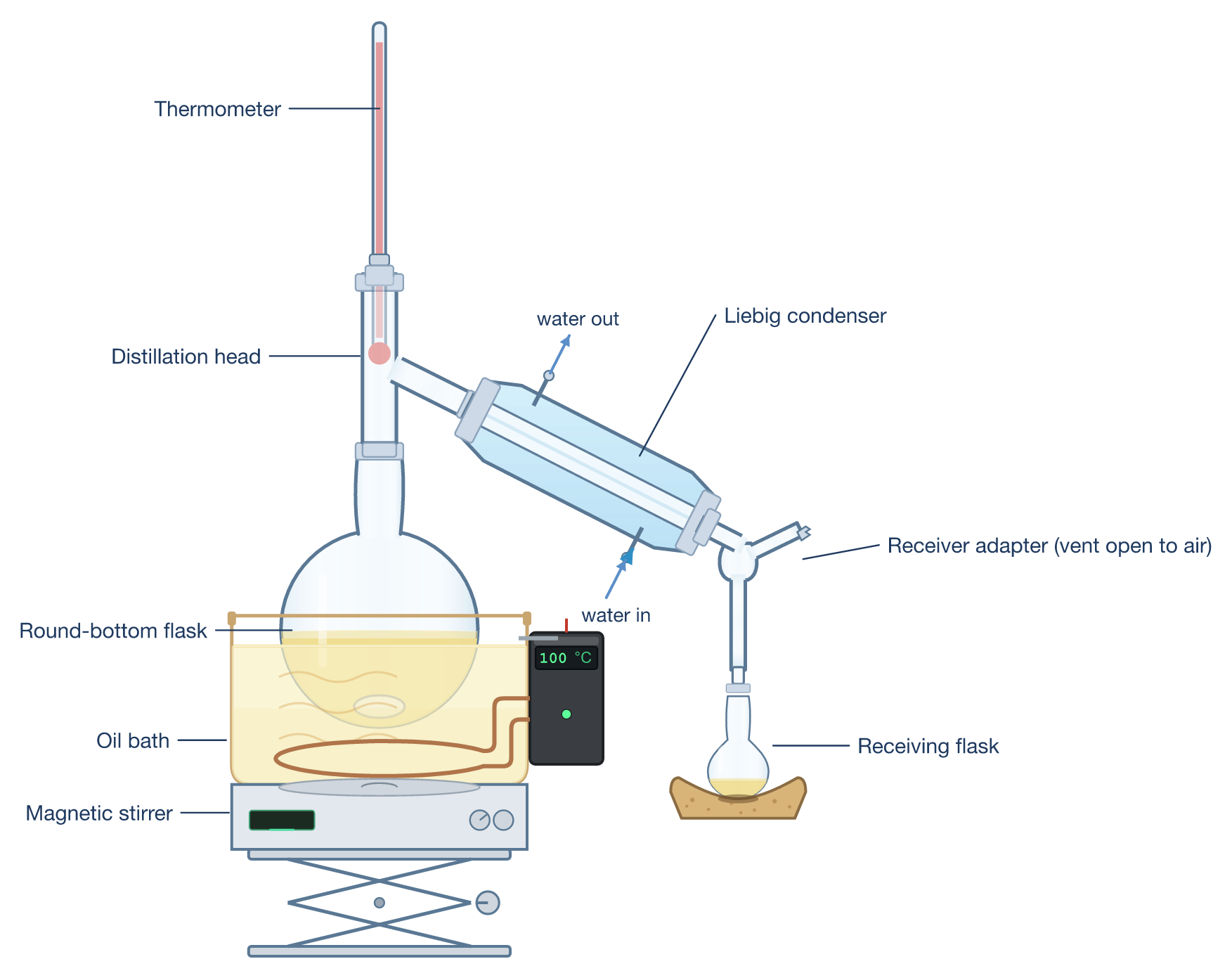
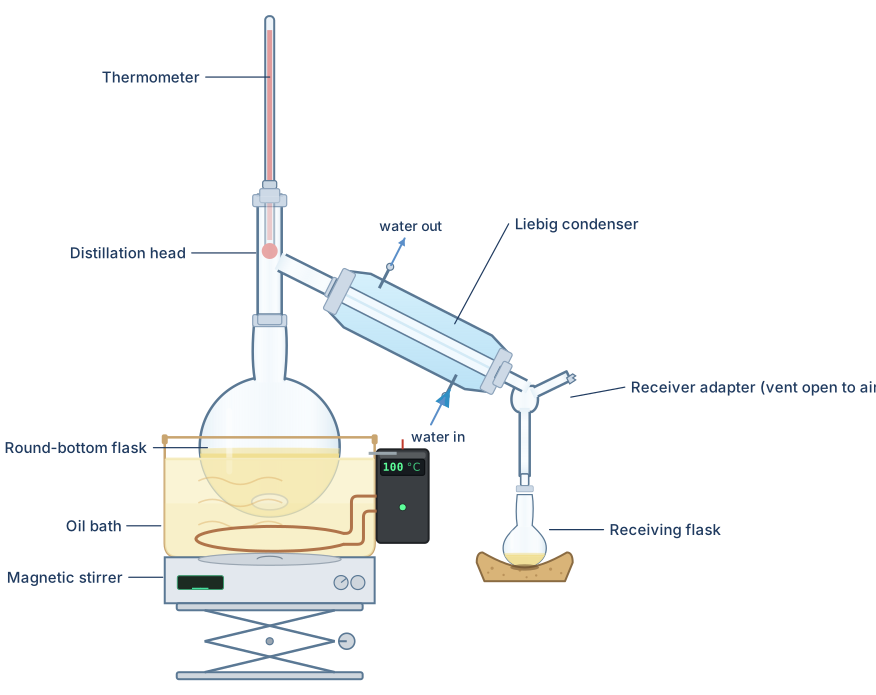
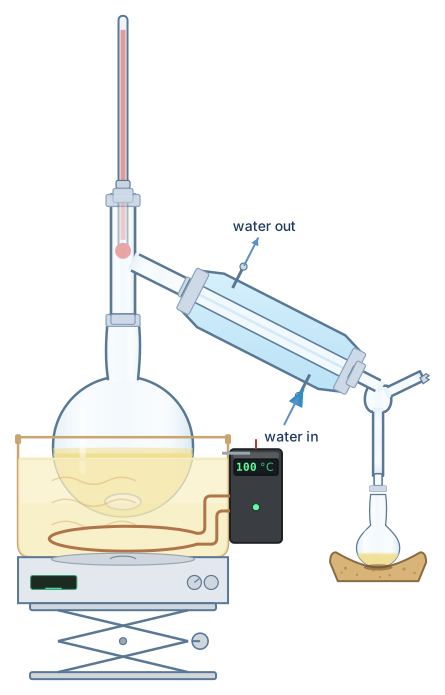
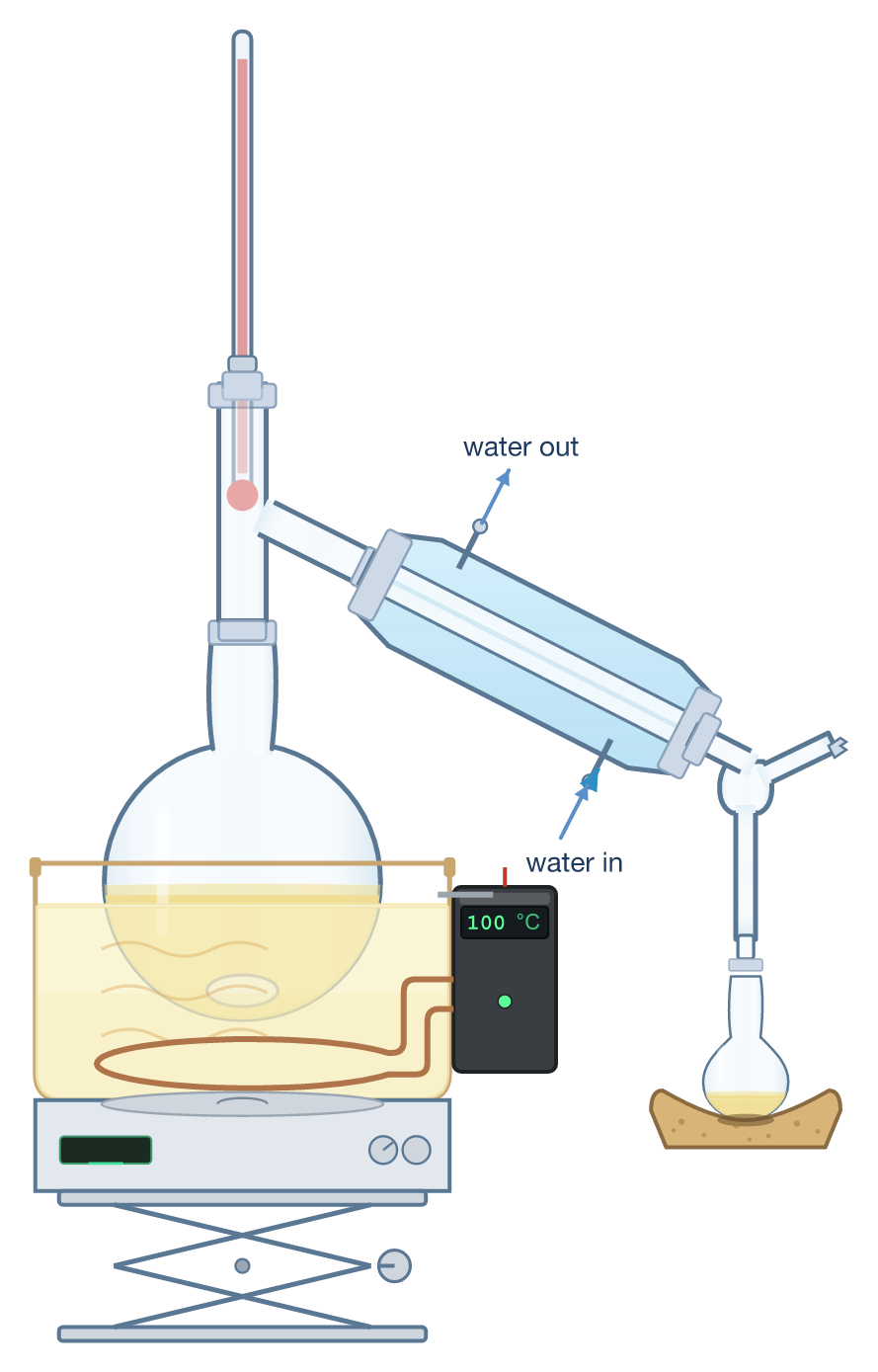
Simple distillation separates liquids with widely different boiling points and purifies solvents. The vapor is condensed in a condenser and collected in a receiver.
.chemc is a FlaskConnect drawing file. Open it in the free FlaskConnect app to change the glassware, labels and layout before exporting (double-click it on Mac or Windows; on iPad, open it from the Files app and choose FlaskConnect).
Free to use without attribution in lab reports, theses, teaching materials, slides, supporting information and on the web, including modified and commercial use. Released under CC0 1.0 (public domain dedication).
How simple distillation works
Heating the flask vaporizes the more volatile component first. In the distillation head the vapor surrounds the thermometer bulb, which reads the temperature of the vapor that is distilling (a guide to its boiling point). The vapor then condenses in the Liebig condenser and collects in the receiver.
Simple distillation works for liquids whose boiling points are far apart, and for separating a solvent from non-volatile impurities. Liquids with close boiling points need fractional distillation, with a fractionating column between the flask and the head.
Equipment
- Round-bottom flask
- Distillation head
- Thermometer
- Liebig condenser
- Receiver (vacuum) adapter with a side arm
- Receiving flask
- Oil bath, magnetic stirrer and stir bar
- Coolant
Setup tips
- Set the top of the thermometer bulb level with the bottom of the side arm of the distillation head. Too high or too low and it will not read the vapor temperature (the boiling point) correctly.
- Keep the system open to the air somewhere (leave the side arm of the receiver adapter open). Never heat a closed system.
- Run the coolant in at the lower inlet and out at the upper outlet so the jacket stays full.
- Prevent bumping with a stir bar or boiling chips.
- Fill the flask no more than half to two-thirds, and never distill to dryness (especially dangerous with solvents that may contain peroxides).
- Cool the receiver in ice water to keep volatile fractions from escaping.
Common mistakes
- The thermometer bulb sits above the side arm (reads low) or in the liquid.
- Coolant enters at the top, so the condenser never fills.
- The receiver side is sealed too (side arm blocked).
- Distilling until the flask is dry.
FAQ
- Where should the thermometer bulb go?
- Level the top of the bulb with the bottom of the side arm of the distillation head. The whole bulb then sits in the vapor going to the condenser and reads its temperature correctly.
- Which way should the cooling water flow?
- In at the lower inlet and out at the upper outlet. The jacket stays full, and the water flows against the vapor (countercurrent), which cools best.
- What is the difference between simple and fractional distillation?
- Fractional distillation adds a fractionating column (such as a Vigreux column) above the flask, where the vapor condenses and re-vaporizes many times, so components with close boiling points can be separated. Simple distillation uses no column.
- Why should you never distill to dryness?
- The residue overheats and can decompose or crack the flask. With solvents that may contain peroxides, such as ethers, the peroxides become concentrated and can explode.
- Can I use this diagram in my lab report?
- Yes. It is released under CC0, so you can use and modify it without attribution. Open the .chemc file in FlaskConnect to change the glassware or labels before exporting.
Always follow your institution's safety rules and your supervisor's instructions.
Draw this in the app
This diagram was drawn in FlaskConnect. Pick the glassware and it connects itself, coolant lines and all, in a few minutes. Apparatus drawing and export (SVG, PNG, PowerPoint, Word, Excel) are free.