 FlaskConnect™
Home › Apparatus gallery › Reflux apparatus
Reflux Apparatus Diagram (Labeled, Free SVG/PNG)
A reflux setup heats a reaction at the boiling point of the solvent for a long time. Vapor condenses in the condenser and drips back into the flask, so no solvent is lost.
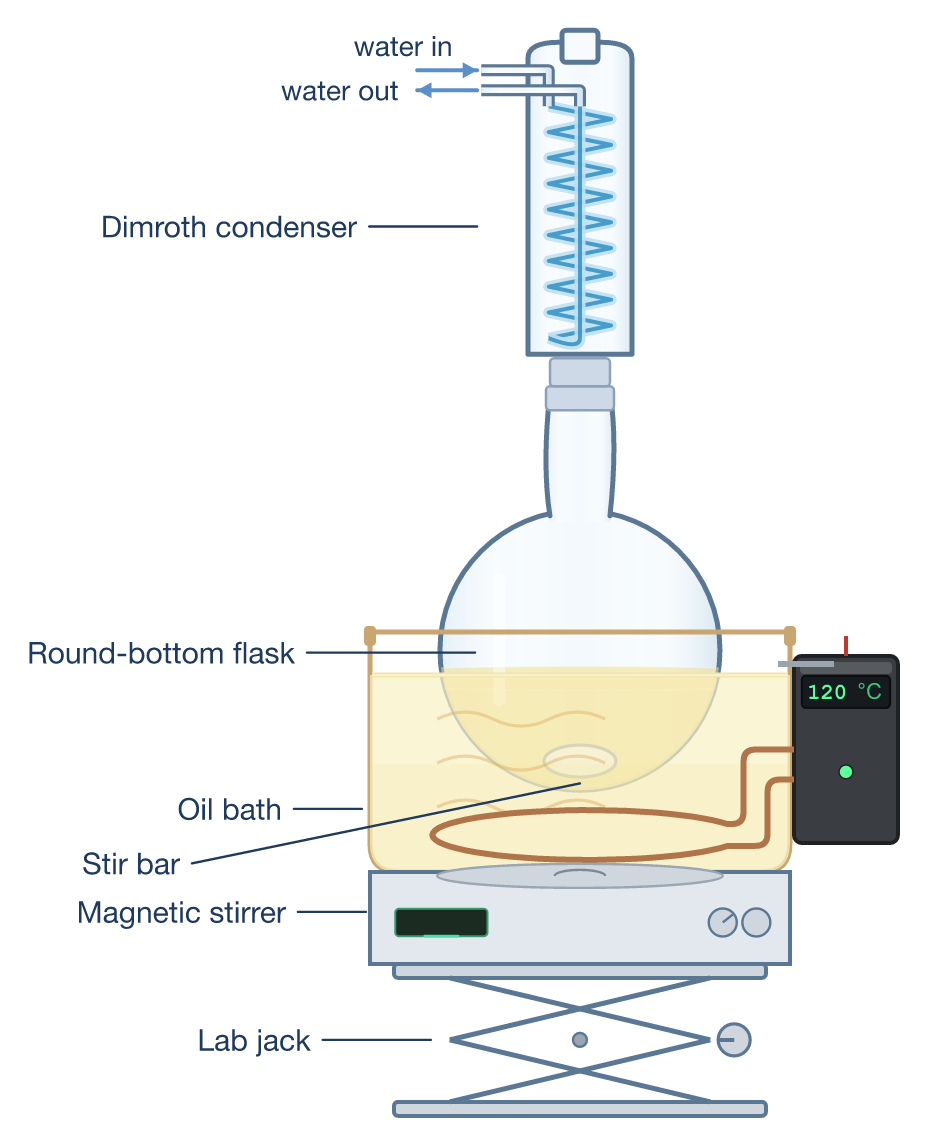
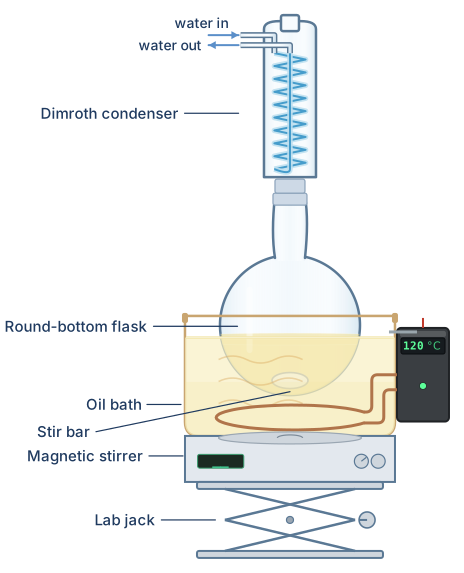
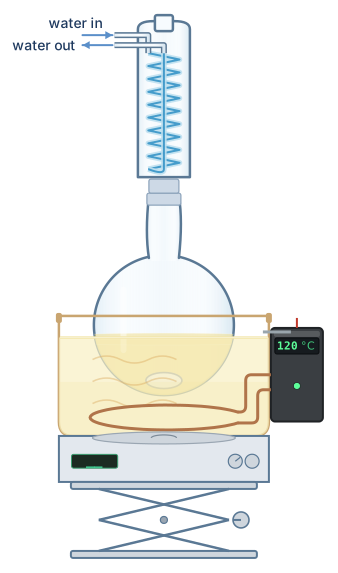
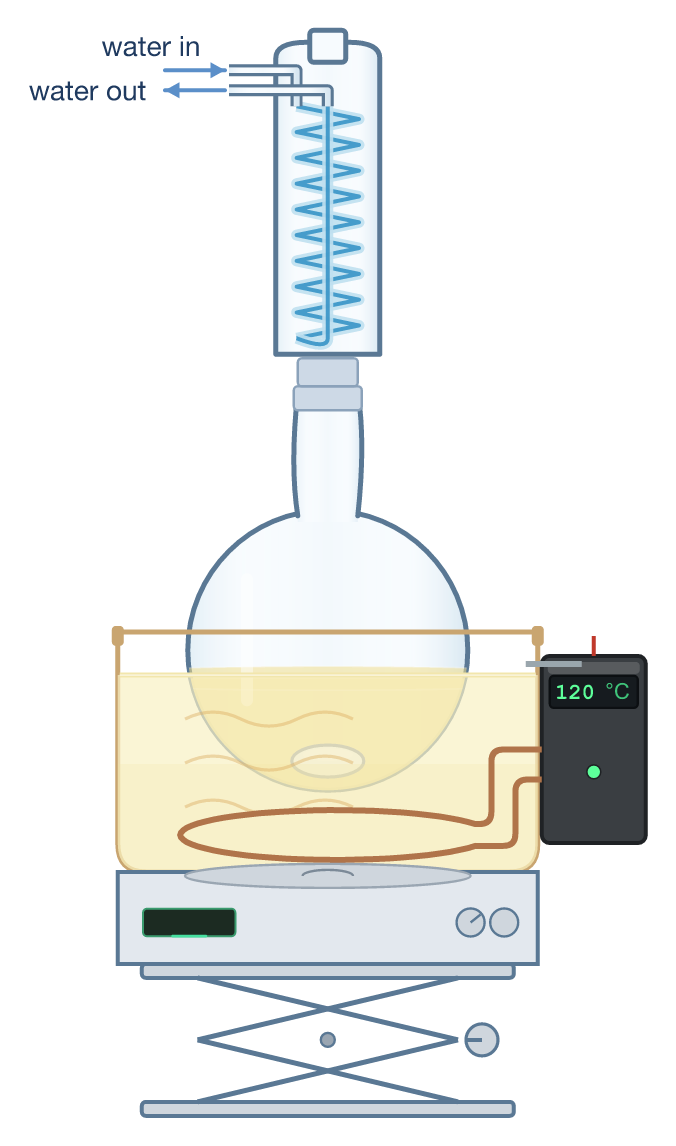
.chemc is a FlaskConnect drawing file. Open it in the free FlaskConnect app to change the glassware, labels and layout before exporting (double-click it on Mac or Windows; on iPad, open it from the Files app and choose FlaskConnect).
Free to use without attribution in lab reports, theses, teaching materials, slides, supporting information and on the web, including modified and commercial use. Released under CC0 1.0 (public domain dedication).
How reflux works
The flask is heated so the solvent boils steadily. The vapor rises into the condenser, where coolant flowing through the jacket (or through the inner coil of a Dimroth condenser) cools it until it condenses. The liquid runs straight back into the flask, so the mixture can be heated for hours without losing solvent.
At atmospheric pressure, the temperature of the boiling mixture is set roughly by the boiling point of the solvent. To run the reaction hotter or cooler, choose a solvent with a different boiling point.
Equipment
- Round-bottom flask
- Dimroth condenser (an Allihn or Liebig condenser also works)
- Oil bath (or heating mantle)
- Magnetic stirrer and stir bar
- Lab jack
- Coolant (chiller or tap water)
Setup tips
- Leave the top of the condenser open to the air. Heating a sealed system builds pressure and can break the glassware. To keep out moisture or air, fit a drying tube or an inert-gas balloon or bubbler.
- Stir with a stir bar, or add boiling chips before heating, to prevent bumping.
- Start the coolant before heating. In a Liebig or Allihn condenser, water goes in at the lower inlet and out at the upper outlet so the jacket stays full (a Dimroth condenser feeds its internal coil through two ports at the top).
- Fill the flask no more than half full.
- Set the bath on a lab jack so it can be lowered quickly.
- Adjust the bath so the vapor condenses in the lower third of the condenser (a visible reflux ring).
Common mistakes
- Stoppering the top of the condenser while heating (a sealed system).
- Running coolant in at the top and out at the bottom, leaving the lower jacket empty.
- Adding boiling chips to a hot liquid (it bumps; cool first).
- Overfilling the flask so boiling liquid rises into the condenser.
FAQ
- What is the difference between reflux and distillation?
- In reflux the condensed liquid returns to the same flask, so nothing is removed and the condenser stands straight up. In distillation the condensate is led away to a separate receiver and collected.
- Which condenser is best for reflux?
- Condensers with a large cooling surface, such as a Dimroth or an Allihn (bulb) condenser, are the usual choice. A Liebig condenser is enough for higher-boiling solvents. An air condenser is only for liquids with very high boiling points.
- Why must the top of the condenser stay open?
- Heating a sealed system raises the pressure, which can break the glassware or push the joints apart. To keep out moisture or air, use a drying tube or an inert-gas line with a bubbler or balloon, which still lets pressure escape.
- How high should the reflux ring be?
- Adjust the heating so the vapor condenses in the lower third of the condenser. If the ring climbs near the top, turn the heat down or increase the coolant flow.
- Can I use this diagram in my lab report?
- Yes. It is released under CC0, so you can use and modify it without attribution. Open the .chemc file in FlaskConnect to change the glassware or labels before exporting.
Always follow your institution's safety rules and your supervisor's instructions.
Watch it built
Building this setup in FlaskConnect (with narration).
Draw this in the app
This diagram was drawn in FlaskConnect. Pick the glassware and it connects itself, coolant lines and all, in a few minutes. Apparatus drawing and export (SVG, PNG, PowerPoint, Word, Excel) are free.