 FlaskConnect™
Home › Apparatus gallery › Suction filtration
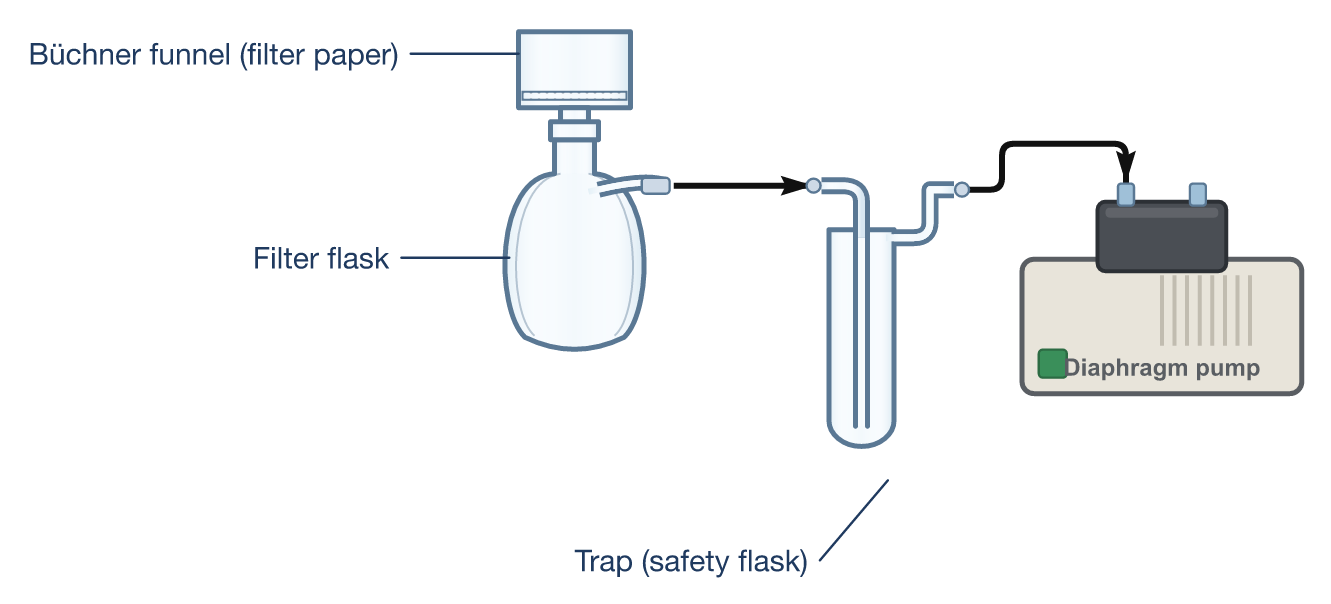
Suction (Vacuum) Filtration Diagram (Büchner Funnel, Filter Flask, Trap)
Suction filtration separates a solid from a liquid quickly. Use it to collect crystals or precipitates and to remove drying agents and other solids.
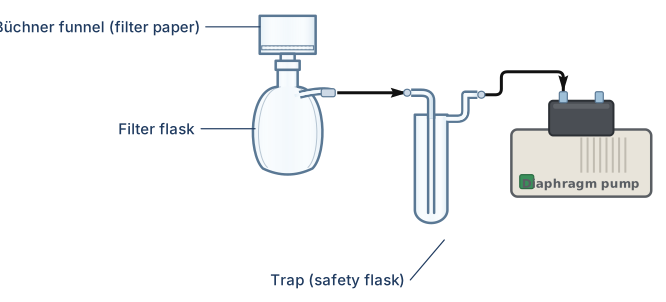
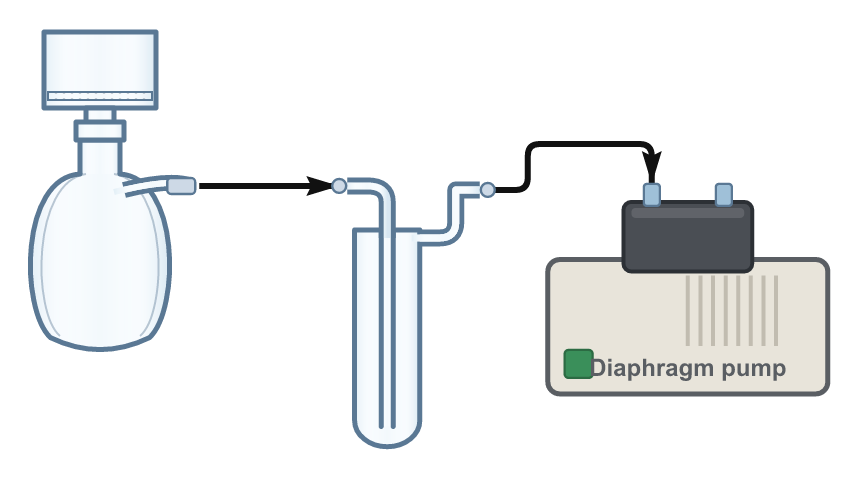
.chemc is a FlaskConnect drawing file. Open it in the free FlaskConnect app to change the glassware, labels and layout before exporting (double-click it on Mac or Windows; on iPad, open it from the Files app and choose FlaskConnect).
Free to use without attribution in lab reports, theses, teaching materials, slides, supporting information and on the web, including modified and commercial use. Released under CC0 1.0 (public domain dedication).
How suction filtration works
The vacuum pump or water aspirator lowers the pressure inside the filter flask. Atmospheric pressure then pushes the liquid in the Büchner funnel through the filter paper much faster than gravity alone would. The solid stays on the paper as a filter cake, and the filtrate collects in the flask.
The trap (safety flask) between the filter flask and the pump catches filtrate before it can reach the pump, and catches aspirator water before it can flow back into the filtrate. For small amounts of solid, use a Hirsch funnel, a smaller conical version of the Büchner funnel.
Equipment
- Büchner funnel and filter paper
- Heavy-walled filter flask
- Rubber adapter
- Trap (safety flask)
- Vacuum pump (or aspirator)
Setup tips
- Use filter paper that covers all the holes without climbing the wall. Wet it with the solvent and pull it flat under vacuum before pouring.
- Put a trap between the filter flask and the pump so the filtrate cannot reach the pump, and aspirator water cannot flow back into the filtrate.
- To stop, first let air into the filter flask (disconnect the hose or open a tap), then turn off the pump or aspirator, to prevent suck-back.
- Use a heavy-walled filter flask rated for vacuum, and never a cracked one.
- To wash the crystals, release the vacuum, add a little cold solvent, then pull the vacuum again.
Common mistakes
- Turning off the pump or aspirator while still under vacuum (suck-back).
- Filter paper lifting so solid passes into the filtrate.
- Pulling a vacuum on a thin-walled Erlenmeyer flask.
FAQ
- When should I use suction filtration instead of gravity filtration?
- Suction filtration is fast and leaves a drier solid, so use it to collect crystals or precipitates. When you want to keep the filtrate, especially when removing insoluble impurities from a hot solution, use gravity filtration with fluted filter paper: under vacuum the solution cools and crystals would come out in the funnel.
- What is the trap for?
- It stops filtrate from reaching the pump if the flask overfills, and stops aspirator water from flowing back into the filtrate when the water pressure drops.
- Why use a heavy-walled filter flask?
- The flask is under vacuum, so atmospheric pressure presses on it from outside. A thin-walled Erlenmeyer flask or cracked glassware can implode.
- In what order should I stop the filtration?
- First let air into the filter flask (disconnect the hose or open the tap on the trap), then turn off the pump or aspirator. Doing it the other way round causes suck-back.
- Can I use this diagram in my lab report?
- Yes. It is released under CC0, so you can use and modify it without attribution. Open the .chemc file in FlaskConnect to change the glassware or labels before exporting.
Always follow your institution's safety rules and your supervisor's instructions.
Draw this in the app
This diagram was drawn in FlaskConnect. Pick the glassware and it connects itself, coolant lines and all, in a few minutes. Apparatus drawing and export (SVG, PNG, PowerPoint, Word, Excel) are free.